
Good Token, Bad Token
At GTC 2026, Jensen Huang mentioned "Tokens" over 70 times. Here is how to understand the currency of the AI era.

You’ve likely heard the word “Token” buzz around every AI conversation lately. But by the end of this post, you’ll have Token Fluency—the ability to see through the hype and understand the core measurement unit of our new world.
In the Industrial Age, the unit of power was the Watt. In the Information Age, it was the Bit. In the AI Age, the Token is the fundamental unit of intelligence. At GTC 2026, NVIDIA CEO Jensen Huang stood before a crowd and didn’t just talk about chips; he talked about “Token Factories.” In Jensen’s vision, the massive data centers of the future are no longer just storage units—they are manufacturing plants that consume electricity and output “Intelligence” in the form of tokens.
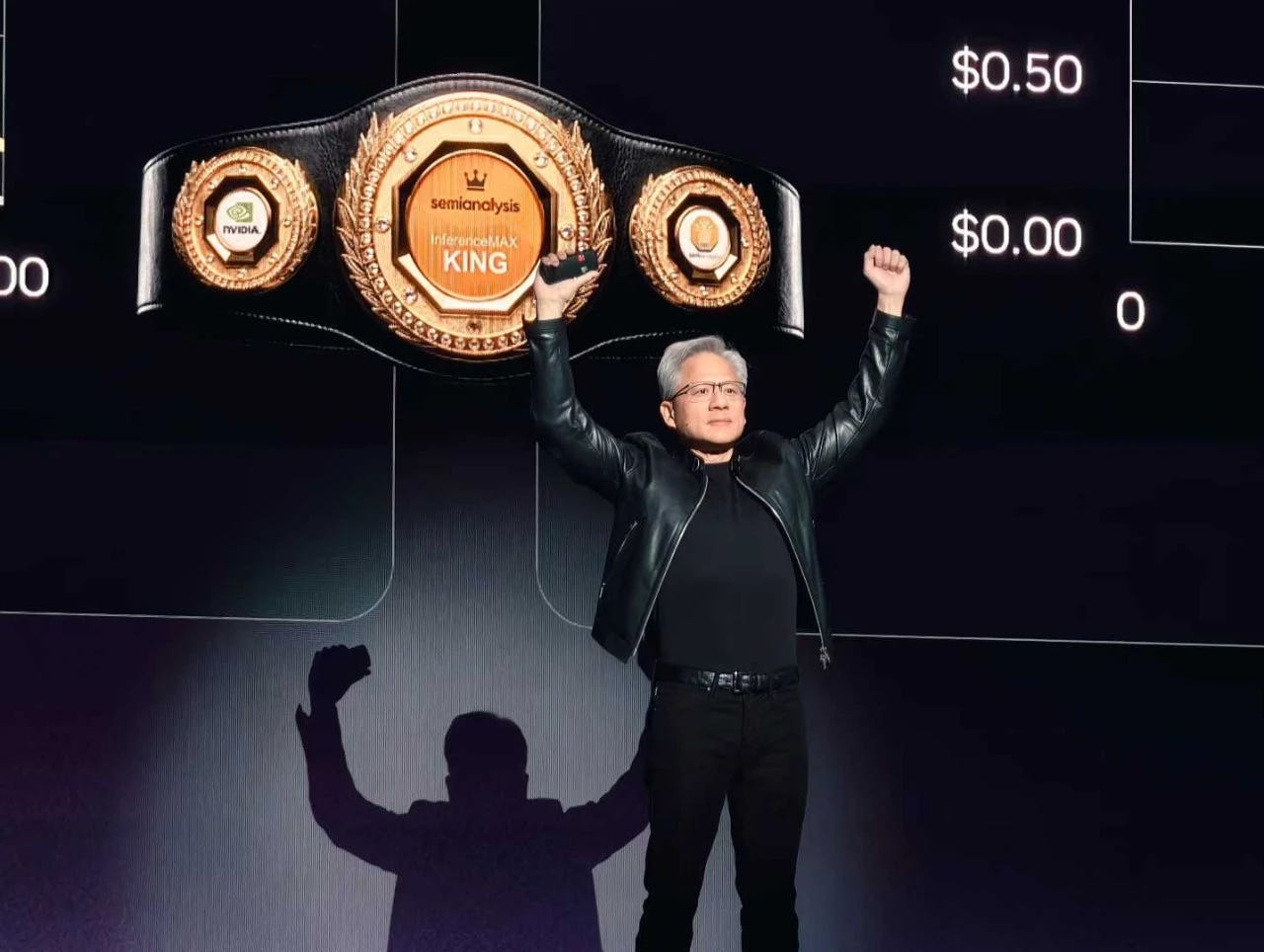
“Token King“ Jenson Huang at GTC 2026
The Tokenizer: How Machines Digest Humanity
To understand a token, we have to look at the Tokenizer. Think of this as a translator. AI doesn’t see words; it sees numbers.
Independent Vocabularies: Every model (GPT, Claude, Llama) has a “dictionary” set in stone before it ever starts learning. One model might have a 32,000-word dictionary; another might have 100,000. These are entirely custom-built by each company.
The Embedding (Semantic Coordinates): This is the soul of the machine. The model turns a word into a “high-dimensional vector”—basically a set of coordinates in a massive digital ocean of meaning. Different models “map” the world differently. In Model A’s mind, “Apple” might be closest to “Fruit.” In Model B’s mind (perhaps trained more on tech news), “Apple” might be closer to “Huawei” or “NVIDIA.”
Not All Token are Created Equal
The biggest mistake people make is assuming a "Token" is a standard unit like an "Inch" or a "Liter." It’s not. We are currently in what I call the "Shambolic Stage" of AI measurement.