
The Chatbot Myth: Why Enterprise AI Still Needs the Dashboard
What a decade of chat products, and the messiest corner of B2B, taught me about where conversation belongs.

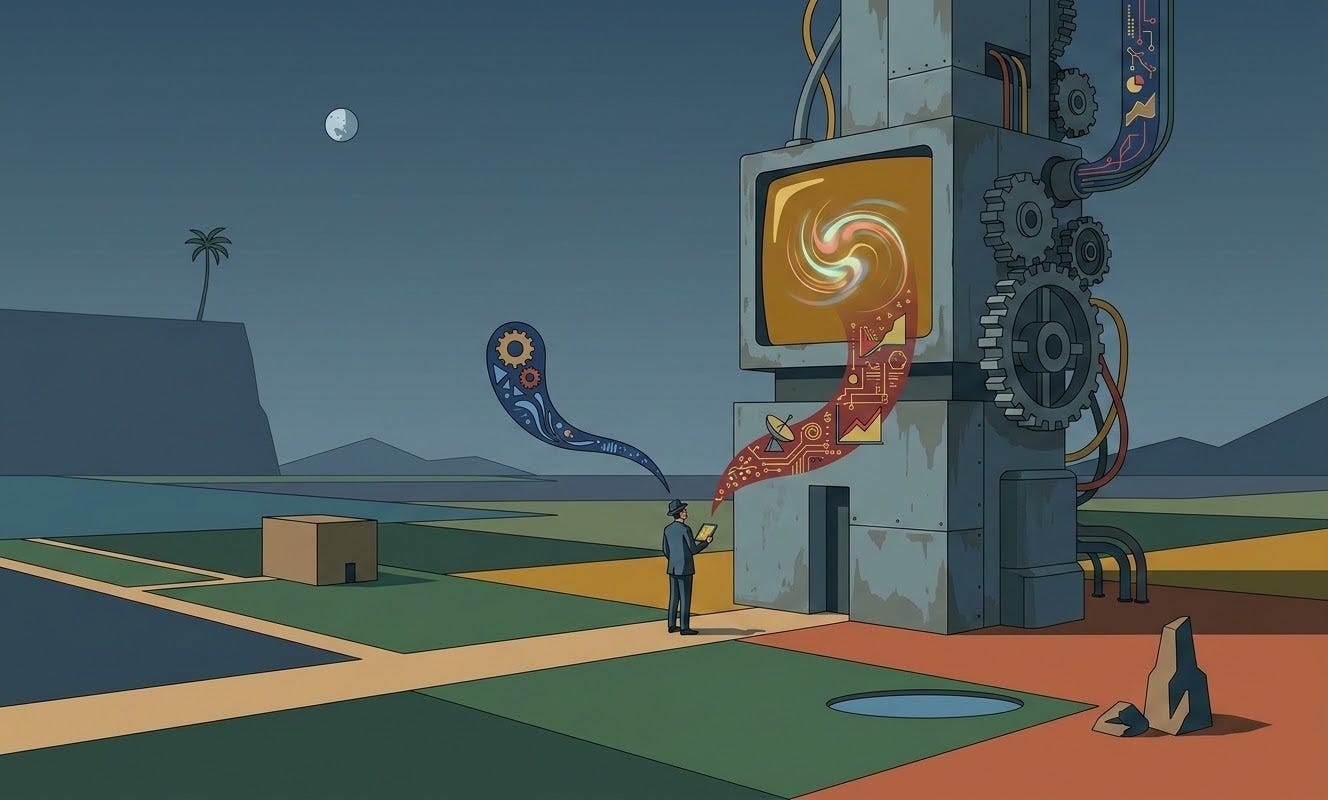
In 2017 I was sure the screen was about to lose.
I was working on voice products in Beijing then, in the first serious wave of conversational AI to come out of China. At Mobvoi we were building systems you talked to. Down the road, Xiaomi was shipping XiaoAI and the Mi AI Speaker, and for one strange moment the whole industry seemed to agree on where this was going. The future was a voice in the air. You would talk to your home, talk to your car, talk to your phone, and the grid of icons we had been tapping for a decade would quietly retire. The interface itself would dissolve into conversation.
It did not happen. Not then.
The speakers sold and the demos dazzled, and then most of us went back to tapping glass. For a long time I filed this under failure of technology. The speech recognition was brittle, the language understanding was shallow, the systems could set a timer but could not hold a thought. Give it better models, I assumed, and the conversational future would arrive on schedule, a little late but inevitable.
The models did get better. They got staggeringly better. And here is the thing I keep turning over as I watch enterprise software get rebuilt around large language models in 2026. Now that the technology genuinely works, conversation still is not eating the world the way we promised it would. It is eating something. But the shape is different from the dream, and that difference is the most interesting design problem of this cycle.
There is an old idea from linguistics worth borrowing here. Noam Chomsky built a career on a deceptively simple observation: human language is infinitely generative. With a finite vocabulary and a finite set of rules, you can produce an unbounded number of sentences, most of which have never been said before and never will be again. Conversation is open at the top. There is no final sentence.
Business is not like this. A food distributor chasing an overdue invoice is not performing an infinitely generative act. There is a customer, a balance, a due date, a payment, a credit limit, and a small, finite set of things that can legitimately happen next. The surface of the conversation is wide open. The space of valid outcomes is firmly closed. Almost all of the hard, unglamorous work of building conversational software for real companies lives in that gap, mapping an open linguistic surface onto a closed set of consequences without frustrating the human or letting the machine improvise its way into a liability.
When the models were weak, we never reached this problem. We were stuck one floor below it, fighting transcription errors. Now that the models are strong, the gap is the whole game. And in enterprise B2B, where the consequences are money and contracts rather than song requests, I have watched a clear pattern take shape.
Here is the short version, and then I want to walk through how to actually design for it, because this is where the real decisions live.
Chat is becoming the front door to enterprise products. It is not becoming the house. The dashboard did not die. The admin panel did not die. They changed jobs. And the teams shipping conversational software that people actually keep using are not the ones who replaced their interface with a chat box. They are the ones who worked out precisely which parts of the work belong in a conversation and which parts belong behind glass, on a screen, in a table you can sit and stare at.