
The Notepad That Refused to Be a Bot
Ease into people's life gently. How Granola became Silicon Valley's $1.5B default memory layer by refusing to change a single user behavior, and what every AI PM should take from it.

At Xiaomi, I spent a few years working on smart speakers. We used to joke internally that our product required the user to change three habits just to turn on a light. You had to remember the wake word. You had to remember the command grammar. You had to remember which devices you had actually connected to the hub. Three small asks, each trivial in isolation, and every one of them a place where a normal person could quietly decide it wasn’t worth the trouble. The category eventually hit a ceiling, and the ceiling was not the technology. It was the accumulated weight of behavior change.
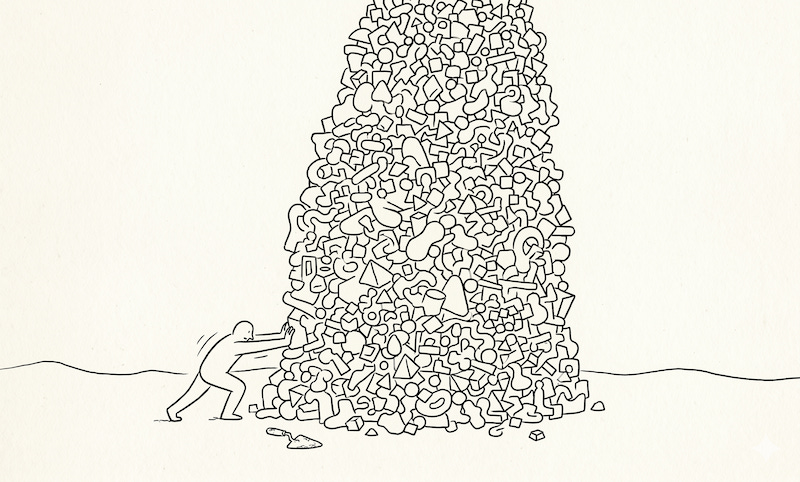
I thought about those years constantly when Granola started showing up in my workflow in 2024. The pattern was inverse. It asked for nothing. I opened my laptop, I joined a Zoom or a Google Meet or a Teams call, and Granola just sat there, doing its thing, invisible to everyone else on the call. No wake word. No bot avatar in the participant list. No link to paste into the chat. I didn’t have to tell anyone I was using it. I didn’t have to tell myself. It took me a few weeks to realize that this was the entire product, and that the entire product was also the entire strategy.
Last month Granola closed a $125 million Series C at a $1.5 billion valuation, led by Danny Rimer at Index Ventures and joined by Mamoon Hamid at Kleiner Perkins. Reported revenue growth in the preceding quarter was 250 percent. The cap table now includes Tobi Lütke, Amjad Masad, Karri Saarinen, and Guillermo Rauch, which is an unusually dense concentration of product-led founders voting with their own money. What I want to write about here is why I think any of this happened, and what any of us building AI products should actually take from it.
The Year They Cut Half the Product
Granola was incorporated in London in March 2023 by Christopher Pedregal and Sam Stephenson. Pedregal had founded Socratic, an AI tutor acquired by Google, and then built Stack inside Google’s Area 120 incubator before it was folded into Google Drive. Stephenson was a designer whose career ran through a digital ski coach, a swim coaching wearable, and a low-friction note-taking app called Ideaflow. Neither of them was a first-time founder. Neither of them was in a hurry.