
Anatomy of OpenClaw
What you need to know before putting Claw into your workflow


In a previous post, I covered what OpenClaw is and why Tencent is going all-in on it with eight new enterprise agents. Today, I want to go deeper. I want to crack open the lobster and show you what's actually inside—not at the code level, but at the conceptual level. Because understanding how these agents work under the hood is the difference between using one effectively and watching it delete all your emails.
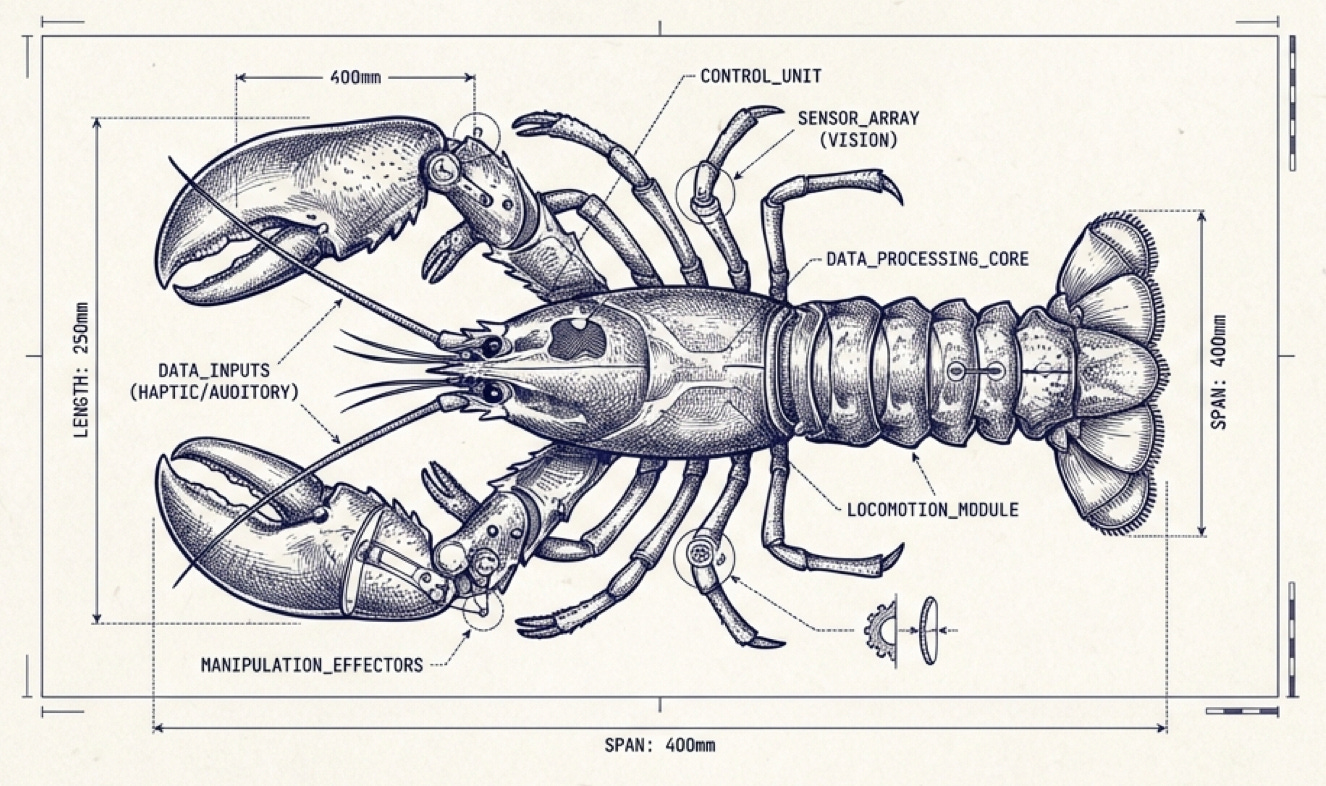
The Lobster Is Not the Brain
Here is the single most important thing to understand about OpenClaw, and honestly, about every AI agent you’ll encounter in 2025 and beyond: OpenClaw is not artificial intelligence.
OpenClaw is not a language model. It doesn’t think. It doesn’t reason. It doesn’t understand your commands. It is, as one researcher put it, a crustacean—a simple creature running on hardcoded rules, sitting between you and the actual AI.
The architecture is straightforward. You send a message to OpenClaw through WhatsApp, Telegram, or a web interface. OpenClaw takes your message, wraps it in a massive block of context—who the agent is, what tools it can use, what it remembers about you—and passes that entire package to a cloud-based language model like Claude, GPT, or Gemini. The language model does the actual thinking. It generates a response. OpenClaw receives that response, checks if the model wants to use any tools, executes those tools on your computer, and sends the result back to you.
That’s it. OpenClaw is a middleman. A very sophisticated, very useful middleman.
Why does this matter? Because the intelligence of your agent depends entirely on which language model you plug into the back end. The professor discovered this the hard way. When he first set up his lobster, he connected it to a cheaper, older model. The result was abysmal. The agent couldn’t complete basic tasks, got confused constantly, and felt like a toy. He was ready to dismiss the entire concept. Then he switched to a newer, more capable model, and the difference was night and day. Suddenly the agent could plan multi-step workflows, write code, navigate web pages, and manage files with genuine competence.
Same lobster. Same software. Completely different brain.
This is the first decision you need to get right if you’re considering putting Claw into your workflow: the model you choose is the agent you get.
How It Fakes Having a Personality
If OpenClaw is just a dumb relay between you and a language model, how does it feel so much like a personal assistant? How does it remember your name, your preferences, your ongoing projects?